











A banner usually gets judged before anyone reads a single word on it. If it curls at the corners, reflects too much light, or hangs with the wrong hardware, the problem shows immediately. That is why banner printing is not just about putting a logo on vinyl. It is about choosing the right format for where the banner will be used, how fast it needs to be produced, and what kind of traffic it has to stop.
In New York, those decisions tend to happen fast. A retailer needs a sidewalk promotion by the afternoon. An exhibitor needs a step-and-repeat backdrop before load-in. A broker needs leasing signage that can go up without looking temporary. Good banner work starts with the practical questions first because the wrong material or display style costs time twice - once in production, and again when the banner underperforms on site.
What banner printing actually needs to solve
The main job of a banner is visibility. That sounds obvious, but many orders get slowed down because the buyer starts with design details before locking in usage. Indoor and outdoor banners do not behave the same way. A banner meant for a trade show booth needs cleaner presentation and tighter finishing than a short-term promotional banner hung behind a table. A street-facing banner needs to account for wind, mounting points, and distance from foot traffic.
That is where banner printing becomes a production decision, not just a design decision. Material, finish, size, and hardware all affect how the final piece looks once it is installed. A banner can print beautifully and still fail if the setup does not match the location.
Choosing the right banner printing format
There is no single best banner type. The right option depends on whether the goal is portability, durability, image quality, or speed of setup.
Vinyl banners for everyday promotion
Vinyl banners are the standard choice for a reason. They work for storefront promotions, event signage, sale announcements, sponsor displays, and general business visibility. They are durable, relatively easy to install, and available in sizes that fit anything from a fence panel to a building interior.
For most customers, vinyl makes sense when the banner needs to be bold, cost-effective, and ready quickly. Finishing matters here. Grommets, hems, and reinforced edges are not minor add-ons. They affect how the banner hangs and how long it lasts under tension.
Retractable banners for portable setups
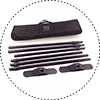
Retractable banner stands are built for speed. They make sense for trade shows, conferences, lobbies, recruiting events, pop-up retail, and presentations where setup time is limited. The print itself matters, but so does the stand quality. If the hardware is unstable or the banner material is too thin, the display looks temporary in the wrong way.
This format is less about weather resistance and more about professional presentation. It is a practical choice when one person has to carry, set up, and break down the display without tools.
Step-and-repeat backdrops for branded photo areas
Step-and-repeat banners are common for media walls, sponsor events, red carpet setups, product launches, and nonprofit galas. They need consistent print quality across a larger area, and spacing has to be handled correctly so logos repeat cleanly in photos.
This is one of those jobs where size matters more than many first-time buyers expect. A backdrop that looks large on screen can feel undersized once photographers, guests, and equipment are in place. When the banner is meant to appear in photos, width and framing should be decided early.
Mesh, fabric, and specialty applications
Some locations call for something other than standard vinyl. Mesh works better in windy outdoor settings because it allows air to pass through. Fabric can create a cleaner look for indoor events where glare and fold lines would be a problem. Pole banners, flags, and hanging displays solve different visibility needs when floor space is tight or sight lines are longer.
The trade-off is simple. Specialty materials can improve performance in specific settings, but they are only worth it when the environment justifies the change. For a short indoor promotion, basic vinyl may still be the faster and smarter choice.
Size, placement, and viewing distance
One of the most common banner mistakes is choosing size based on available artwork instead of viewing distance. A banner seen from six feet away can carry more detail than one meant to be read from across a street or a convention aisle. If people need to process the message in motion, the design should be shorter and the scale should be larger.
Placement affects everything. A banner above a booth table has a different job than one mounted on a wall behind a registration desk. A sidewalk banner needs immediate readability. A backdrop banner needs to support the full scene around it. The best production choice usually comes from answering one question clearly: where will people first see it?
If the answer is from far away, simplify. If the answer is up close, finish quality becomes more important. That balance helps prevent overspending on details nobody will notice or underspending on visibility that the banner absolutely needs.
Design choices that help a banner perform
Banner printing can only do so much if the file is crowded, low resolution, or built without margins for finishing. Good banner design is less about adding content and more about removing friction. The message should be understood quickly. The brand should be recognizable. The contact point, if included, should be readable without forcing the viewer to stop and study the piece.
Color also behaves differently at scale. Bright backgrounds can work well, but contrast matters more than intensity. Black text on a dark photo often looks acceptable on a laptop and much weaker once printed large. The same goes for thin fonts, small disclaimers, and logos placed too close to the edge.
For event graphics, consistency across formats matters. If a business is ordering a banner, table throw, poster, and backdrop for the same activation, they should look like part of one system. That creates a stronger visual presence than one oversized banner trying to do all the work alone.
Why turnaround time changes the buying decision
Fast production is not just a convenience in NYC. It changes what customers can realistically pull off. Same-day banner printing can save a launch, cover a missed shipment, replace a damaged display, or help a team capitalize on a short-window promotion. That urgency is common in retail, events, real estate, hospitality, and trade show work.
But speed also changes what should be ordered. If the deadline is tight, proven formats win. Standard vinyl banners, retractable displays, posters, rigid signs, and event backdrops are easier to produce and deploy quickly than highly customized installations that require multiple rounds of fitting. Buyers under deadline usually do better when they choose the cleanest path to a finished display rather than the most ambitious one.
That is where a local production partner has a practical advantage. If a job needs same-day attention, local pickup, or quick corrections before an event, proximity matters. Print Banners NYC operates in exactly that pressure zone, where timing is often part of the product.
Banner printing for common NYC use cases
Retail promotions usually need street visibility first. Sale banners, window graphics, posters, and sidewalk-facing signage work best when the message is short and the color contrast is high.
Trade show exhibitors often need a coordinated package rather than a single print. A retractable banner, branded table cover, backdrop, and supporting signs create a more complete booth presence than one stand-alone display.
Real estate teams tend to prioritize durability and clarity. Leasing banners, open house signage, and development marketing graphics need to hold up outdoors and still present professionally.
Event planners often care most about setup speed and appearance in photos. That usually points toward step-and-repeat backdrops, registration signage, directional boards, sponsor graphics, and branded displays that can be installed without slowing down load-in.
How to order the right banner the first time
The fastest orders usually come from customers who know four things upfront: where the banner will be used, what size the space allows, how it will be mounted, and when it is needed. Those details narrow the material and finishing options quickly.
If any of those details are unclear, the order can still move forward, but there may be trade-offs. A banner chosen without a mounting plan may need extra finishing later. A design approved without checking sight lines may need resizing. Neither issue is unusual, but both can slow down production when the deadline is tight.
The better approach is to treat banner printing as part of the setup, not a separate task. Once the banner is matched to the environment, the result is usually cleaner, faster to install, and more effective where it counts - in front of customers, attendees, and foot traffic.
When you need a banner, the smartest choice is rarely the most complicated one. It is the format that fits the space, reads clearly, and is ready when the event starts.