






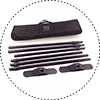





A sidewalk promotion has about three seconds to work. In a busy NYC retail corridor, that means your sign needs to stop foot traffic, explain the offer fast, and hold up outdoors without becoming a hassle for your staff. That is why choosing the best signs for sidewalk promotions is less about picking the cheapest format and more about matching the sign to the street, the message, and the time you have to set it up.
Some businesses need a quick daily special board they can change by hand. Others need branded signage that looks polished for a grand opening, pop-up, real estate open house, or street-level event. The right choice depends on weather exposure, sidewalk width, viewing distance, and how often your promotion changes.
What makes the best signs for sidewalk promotions?
The best sidewalk signs do three jobs at once. First, they get noticed in a crowded environment filled with parked cars, poles, pedestrians, and competing storefronts. Second, they communicate one clear message without forcing people to stop and read a paragraph. Third, they stay stable and readable through regular outdoor use.
For most local promotions, visibility matters more than size alone. A smaller sign with strong contrast and a short offer often beats a larger sign packed with too much text. Durability matters too. A sign that curls, fades, or tips over turns into a maintenance issue fast.
If your promotion changes daily, flexibility is critical. If you are promoting a multi-week campaign, a more finished printed display may save time and look sharper. That trade-off comes up often: reusable hardware with changeable graphics versus a one-purpose printed sign that is ready to go immediately.
A-frame signs are the go-to sidewalk option
If you asked most storefront operators to name the best signs for sidewalk promotions, A-frame signs would be near the top. They are popular because they are compact, easy to place near an entrance, and visible from both directions of foot traffic.
A-frame signs work especially well for restaurants, salons, retail stores, gyms, and service businesses running walk-in offers. They can carry printed inserts, rigid panels, or dry-erase messaging depending on the hardware style. That makes them useful for both fixed branding and fast message changes.
The main advantage is practicality. Staff can set them out in seconds, move them in at closing, and update the message without reworking an entire display. The limitation is space. If you try to fit a menu, a slogan, a logo, and a discount on one face, the sign loses impact. Keep it tight and readable from a few steps away.
Best use cases for A-frame signs
A-frames are strongest when the message is short and immediate: daily specials, limited-time discounts, now open notices, directional prompts, or event check-in guidance. They are less effective for detailed product education or heavily branded campaigns that need a larger visual field.
Sidewalk banners work when you need more visual impact
For promotions that need stronger branding, vinyl banners are a solid step up. They give you more room for large text, bold color, product imagery, and sponsor logos. If you are promoting a grand opening, block party, street sale, school event, or community activation, banners can create a much bigger street presence than a small board sign.
The trick is placement. A banner is only as good as the way it is mounted. If it hangs loosely, blocks a walkway, or sits too low, it can become more of a problem than a promotion. On the other hand, when installed cleanly against barricades, fences, storefront rails, or event structures, it reads from farther away and supports stronger branding.
Banners also make sense when you need same-day production for a short promotional window. A business can move quickly from approved artwork to street-ready display without building a complicated setup. For NYC event operators and local retailers, speed matters as much as format.
Feather flags catch motion and distance
If your promotion needs visibility from farther down the block, feather flags deserve serious consideration. They add vertical height, movement, and color, which helps in dense commercial areas where ground-level signage gets lost.
Flags are a strong fit for sidewalk sales, outdoor events, car-related promotions, fitness studios, seasonal retail campaigns, and real estate open houses. They are good at announcing presence before a customer reaches the storefront. That makes them less about detailed information and more about attraction.
There is a trade-off, though. Flags are not ideal for long offers or too much copy. They work best with a few words, a strong brand color, and a simple callout like Sale, Open, Leasing, or Event Today. They also need proper bases and enough clearance to avoid creating a sidewalk obstruction.
Rigid signs are better for a cleaner, more permanent look
When businesses want a sharper presentation than a temporary board or banner, rigid signs are often the better option. Foam board, PVC, corrugated plastic, and other hard substrates can be mounted on easels, stands, or barriers to create a more finished look.
This format is useful for retail launches, venue signage, directional event graphics, property marketing, and branded promotional messaging outside office or hospitality locations. Rigid signs present clean edges, stable surfaces, and full-color print quality that holds up well for repeated short-term use.
The decision usually comes down to handling and environment. Lightweight rigid signs are easy to move, but not every substrate is ideal for heavy outdoor wear. Corrugated plastic is often practical for temporary outdoor campaigns, while more polished rigid materials may be better for protected entry areas or one-day activations.
Poster-based sidewalk displays help when promotions change often
Some businesses need promotional signage that turns over every week, or every day. In those cases, poster stands and sign holders can be more efficient than reprinting a complete hardware setup each time.
A poster display lets you swap out graphics while keeping the frame or holder. That is useful for theaters, galleries, clinics, retailers, and event venues running changing schedules, rotating promotions, or calendar-driven offers. It also helps marketing teams standardize the display format while refreshing the message as needed.
The weakness is weather exposure. Posters perform best in sheltered sidewalk areas, covered entrances, or enclosed display holders. If your storefront gets direct rain and wind, a more rugged sign style may be the better investment.
Window decals support sidewalk promotions from inside the storefront
Not every sidewalk promotion needs a freestanding sign. If the sidewalk is narrow or local conditions make outdoor placement difficult, window decals and storefront graphics can do a lot of the same work without taking up pedestrian space.
This approach works well for sale announcements, limited-time offers, opening soon graphics, QR-driven promotions, and branded campaign messaging. A well-designed window decal can read clearly from the sidewalk while staying protected from handling and weather.
The trade-off is angle and distance. If the glass has glare, reflections, or interior clutter behind it, readability can drop. Good contrast and larger type solve most of that, but it is still a format that depends heavily on the specific storefront conditions.
How to choose the right sidewalk sign for your promotion
Start with the message. If the offer can be said in five words, an A-frame or flag may be enough. If you need a full branded visual with dates, sponsors, or event details, a banner or rigid sign is usually a better fit.
Next, think about how long the promotion will run. A one-day sidewalk activation can justify a fast-turn custom print built for a single purpose. A repeating weekly promotion often calls for reusable hardware with changeable inserts. That keeps costs more predictable over time.
Then consider the physical site. A narrow Manhattan sidewalk does not behave like a suburban storefront. Wind tunnels, pedestrian density, entry clearance, and local building conditions all affect what will actually work. A sign that looks great in a product photo may be wrong for a tight, high-traffic block.
Finally, be realistic about setup. If your staff needs five minutes and no tools, pick hardware that matches that reality. The best sign is not the one with the most features. It is the one your team will actually use correctly every day.
Design matters as much as format
Even the best signs for sidewalk promotions fail when the layout is overloaded. People walking by should understand the offer almost instantly. That usually means one headline, one supporting detail, and one action. Too many logos, fonts, or colors dilute the message.
Contrast does most of the heavy lifting. Dark text on a light background, or the reverse, improves readability. Large type matters more than clever wording. If your promotion is time-sensitive, put the offer first and the branding second.
Photos can help, but only if they reinforce the sale. For food, beauty, and product retail, strong imagery can increase attention. For directional and service promotions, plain text often performs better because it reads faster.
For businesses that need quick production, a straightforward design also speeds approval and printing. That matters when you are trying to get signage live the same day, not next week.
In a city where people pass your storefront fast, the right sidewalk sign does not need to say everything. It just needs to get the right person to stop, look, and walk in.