










A backdrop that is too small disappears behind a crowd. One that is too large can block doors, overwhelm a booth, or leave you paying for material you cannot use. This custom backdrop size guide helps New York businesses, event planners, exhibitors, and marketing teams choose dimensions that fit the space, the audience, and the camera angle before production starts.
The right size is not only about making a logo look good. It affects setup time, transportation, hardware selection, sightlines, and how many guests can stand in front of the graphic at once. For a tight-turnaround event, deciding this early also keeps your print order moving without last-minute resizing.
Start With the Purpose of the Backdrop
A custom backdrop can be a step-and-repeat photo wall, a trade show booth background, a press conference display, a retail activation wall, or a stage graphic. Each application calls for a different balance of width, height, and visual density.
For photos, the backdrop needs enough width to frame individuals and groups without showing unfinished edges. For an exhibit booth, it should fill the rear wall while leaving room for product displays, counters, and staff movement. For a stage, it needs to read from a distance rather than serve as a close-up photo surface.
Before choosing dimensions, confirm where it will be installed, whether it will use a frame or hang directly, and how people will interact with it. A six-foot-wide backdrop may work perfectly behind a registration table but feel undersized for a red-carpet entrance.
Standard Custom Backdrop Sizes at a Glance
These common sizes cover most corporate events, pop-ups, media moments, and trade shows. The best choice depends on the usable floor space, not just the room's overall square footage.
8 x 8 feet: compact photo moments and small spaces
An 8 x 8-foot backdrop is a practical starting point for small photo areas, storefront promotions, sponsor moments, and compact event venues. It can comfortably frame one to three people in a posed photo. The square format also works well when ceiling height is limited.
Use this size when the backdrop will sit against a wall, near a reception desk, or inside a narrow activation footprint. It is less effective for large group photos or a busy press line where several people need to stand shoulder to shoulder.
8 x 10 feet: a flexible step-and-repeat choice
An 8 x 10-foot backdrop gives you additional width without becoming difficult to place. It is a strong option for small to medium group photos, branded interviews, award events, and networking receptions. The 10-foot width gives photographers more room to crop while keeping logos visible.
For many NYC event spaces, this is a useful middle ground. It creates a noticeable branded area without requiring the footprint of a full trade show wall.
8 x 12 feet: a strong choice for group photos
An 8 x 12-foot custom backdrop is one of the most versatile sizes for event photography. It can handle groups of four to six people, depending on pose and camera framing, while providing enough repeated branding across the background.
This size is especially useful for launch events, nonprofit galas, sponsor walls, and company celebrations. If attendees are likely to take photos in pairs and small groups throughout the event, 8 x 12 feet gives the backdrop enough presence to stay useful all night.
8 x 16 feet: larger events and wide camera frames
An 8 x 16-foot backdrop works well for larger sponsor activations, media events, fashion presentations, and high-traffic photo lines. It provides room for wider group shots and allows a photographer to move laterally without losing the branded background.
Choose this format when the photo area is a featured part of the event, not an afterthought. It needs clear floor space in front of it, plus enough room for guests to step back, pose, and exit without creating a bottleneck.
10 x 10 feet and 10 x 20 feet: trade shows and branded walls
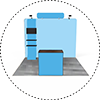
A 10 x 10-foot backdrop is designed for the standard trade show booth footprint. It can cover the back wall of a booth and create a clean branded setting behind a table, demo counter, or product display. If your booth has sidewalls, keep the main visual message centered so it remains readable from the aisle.
A 10 x 20-foot backdrop is better suited to larger exhibits, multi-brand displays, or wide product demonstrations. It can also serve as a dramatic photo wall at a corporate event. Because this size is substantial, measure ceiling clearance and access routes before ordering. Some venues have elevators, loading docks, or hallways that affect how large display hardware can be moved into place.
Match Backdrop Width to the Number of Guests
Photo capacity is often the fastest way to choose a backdrop. As a working estimate, allow roughly two feet of width per person for posed photos. This is not a strict rule - people can stand closer together, and photographers can crop tightly - but it prevents an undersized backdrop from exposing blank wall or venue clutter at the edges.
An 8-foot-wide backdrop works for a couple or a small group. A 12-foot-wide wall is more comfortable for five or six guests. For teams, performers, panelists, or VIP groups, 16 feet or more gives you a cleaner frame.
Remember that people do not stand flat against the backdrop. They typically stand two to four feet in front of it. That distance changes the camera's field of view, so a wider backdrop is often safer when group photography is a priority.
Choose the Right Height for Your Venue
Eight feet is the most common backdrop height because it works in many venues and covers the background behind standing adults. It also fits standard step-and-repeat frames and many trade show display systems.
Go taller when the room has high ceilings, the backdrop will be viewed from far away, or the display is part of a stage or exhibit build. A 10-foot-high graphic can create more visual impact, but only if the venue allows it and the frame is rated for that height.
Lower ceilings require extra attention. Hotels, restaurants, retail interiors, and basement venues may have sprinklers, soffits, lighting fixtures, or signs that reduce usable height. Measure from the finished floor to the lowest obstruction, not simply to the ceiling. Leave clearance so your backdrop can be installed safely and does not look squeezed into the room.
Consider the Print Material and Hardware
The same dimensions can behave differently depending on the material and display method. A tension-fabric backdrop creates a smooth, polished surface and is a popular choice for repeat use. It generally requires a matching frame and should be ordered to the exact hardware size.
Vinyl backdrops are durable and cost-effective for one-time events, outdoor use, and larger custom sizes. They can be finished with pole pockets, grommets, or hems for hanging. If a vinyl banner is attached directly to a wall, fence, or pipe-and-drape structure, confirm the mounting points before finalizing its size.
Retractable banner stands are not replacements for a full photo backdrop, but they can support a smaller branding need where space is limited. A pair of banner stands beside a check-in desk or presentation area may be more practical than a large wall in a crowded room.
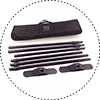
For step-and-repeat backdrops, make sure the printed graphic, frame, and carrying case are planned as one system. A print that is even slightly mismatched to its frame can wrinkle, sag, or leave exposed edges.
Size Your Logo Pattern for the Viewing Distance
A larger backdrop does not mean you should simply enlarge one logo. Step-and-repeat layouts usually work best with a repeated pattern that gives every photo a visible brand mark. The logo scale should match the intended camera distance.
For an 8 x 8-foot photo wall, a logo around 10 to 14 inches wide often produces a balanced repeat pattern. On a 8 x 16-foot wall, the same logo may look too small unless there are multiple sponsors or a denser design is required. There is no single perfect measurement because logo shape, text detail, and sponsor requirements all matter.
Keep important logos away from the outer edges and lower corners, where guests, tables, and camera cropping can cover them. Avoid placing small text at head height. A clean logo pattern with breathing room usually photographs better than a crowded wall of marks.
Measure the Full Setup Area, Not Just the Wall
A backdrop needs more than its printed width. Account for the frame feet, support poles, weighted bases, photographer position, and guest queue. A 10-foot-wide display may need 11 or 12 feet of actual room once hardware is included.
For photo activations, reserve open floor space in front of the backdrop. Guests need room to approach, pose, and move away, while photographers need enough distance to capture the full frame. In a narrow NYC venue, consider an 8 x 10-foot or 8 x 12-foot backdrop rather than forcing a 16-foot wall into a tight layout.
Also check venue rules. Some locations require freestanding displays, prohibit wall adhesives, limit height, or require flame-retardant materials. Getting these answers before artwork approval prevents avoidable production changes.
Plan Early When Your Deadline Is Tight
Same-day banner printing can solve an urgent event need, but the order still needs accurate dimensions, finished artwork, and a clear installation plan. If you need a custom size, send the usable width and height, intended material, event date, and whether hardware is required. That allows the production team to recommend a format that is practical to print, transport, and install.
Print Banners NYC can help match a backdrop to a step-and-repeat frame, trade show booth, media wall, or event space when time is short. The most useful information is simple: the room measurements, number of people expected in photos, and how the backdrop will be mounted.
Choose the size that supports the job in front of it, not the largest size that fits on paper. A properly scaled backdrop keeps your branding visible, your event area organized, and your team ready when the cameras start rolling.