











A customer may only have a few seconds to notice your business between traffic, pedestrians, delivery bikes, and neighboring signs. Promotional flags for storefronts give passersby a clear visual cue at sidewalk level, where window decals and interior displays can be easy to miss. For New York retail, food service, real estate, fitness, and service businesses, a well-placed flag can turn a routine walk-by into a visit.
Unlike a permanent sign, a custom flag is built for changing conditions. Put one out for a grand opening, a leasing event, a weekend sale, a seasonal menu, or an appointment-only promotion. Bring it in when the promotion ends, then reuse the hardware with a new printed flag graphic when the next campaign starts.
Why Promotional Flags for Storefronts Work
Storefront flags create movement. Even a light breeze gives the graphic motion, which naturally draws attention in a streetscape full of fixed signs. That movement is useful when your storefront sits mid-block, near a crowded intersection, or behind parked vehicles.
They also add height without requiring customers to look up at a building facade. A feather flag or teardrop flag can put your message above sidewalk obstacles while keeping the callout close to the entrance. The format works especially well for businesses that need to communicate one immediate message: Open, Sale, Now Leasing, Grand Opening, Walk-Ins Welcome, or Curbside Pickup.
The trade-off is that flags are not a substitute for required permanent signage. They are promotional tools, not a fix for an unclear storefront identity. Use them to direct attention to a specific offer, entrance, or service after your main business sign has established who you are.
Choose a Flag Shape for the Job
Flag shape affects how much copy can be read and how the graphic holds up in wind. The right choice depends on your viewing distance, available sidewalk space, and the message you need to deliver.
Feather Flags for Fast, Vertical Messaging
Feather flags have a tall, curved profile that is easy to recognize from down the block. Their shape gives designers room for stacked text, logos, arrows, and a bold promotional word. They are a strong choice for retail stores, salons, gyms, showrooms, car services, and restaurants that need high visibility from passing foot traffic or vehicles.
Keep the message short. A large word such as SALE or OPEN can do more work than a full sentence squeezed into the flag. If you need details like dates, prices, or terms, put those on a window sign, sidewalk sign, poster, or banner closer to the door.
Teardrop Flags for Windy Locations
Teardrop flags have a taut, rounded shape that keeps the fabric more stable when weather picks up. They are often a practical option outside plazas, event entrances, parking areas, and open corners where wind can make a looser flag move aggressively.
Because the printed area is more compact, teardrop flags are best for a logo, a brief message, or a directional arrow. They look polished and controlled, but they are less forgiving of dense copy.
Rectangular Flags for Brand-Forward Graphics
Rectangular flag styles offer a more traditional banner-like layout. They can work well when your design relies on a horizontal logo, a product image, or a message that needs a more even reading area. For a storefront with room to set the flag farther from the entrance, this format can make the brand feel more established rather than purely promotional.
Before choosing a shape, think about the first thing a person should understand. If it is a single urgent offer, choose the format that supports large type. If it is brand recognition, choose the one that gives your logo enough breathing room.
Design Storefront Flags for a Quick Read
A flag has to work at a glance. The person seeing it may be walking quickly, crossing a street, or looking through traffic. That means the best designs are usually simpler than a flyer, menu, or social media ad.
Start with one message and one action. A coffee shop might use “Iced Coffee” with an arrow toward the entrance. A real estate office could use “Open House” or “Now Leasing.” A retail store may only need “Up to 50% Off.” Add the logo, but do not let it compete with the offer.
Use high contrast between the background and lettering. Dark lettering on a light field or light lettering on a dark field is generally easier to read at a distance than low-contrast brand colors. Avoid thin fonts, outlined type, and detailed photo backgrounds behind the main words. A flag is moving, so the design needs to remain legible while it is not perfectly still.
Directional arrows are useful, but only when they point clearly toward the correct door, floor, event check-in area, or sidewalk route. For locations with multiple entrances, consider separate flags for each path instead of trying to explain everything on one display.
Double-sided printing is often worth considering for storefront use. People approach from both directions, and a one-sided flag can leave half of your potential audience with a reversed or less visible message. The final choice depends on placement and budget, but two-sided visibility is especially helpful near corners and transit-heavy streets.
Get the Base and Placement Right
A great flag graphic will not help much if the base is unstable or the flag blocks the pedestrian path. Storefront installations need to account for surface type, wind exposure, building rules, and local sidewalk conditions.
A cross base is commonly suited to flat, hard surfaces and can be paired with a weighted water bag for additional stability. A ground spike is more appropriate for grass, soil, or landscaped areas. For a sidewalk storefront, the hard-surface setup is usually the practical choice, but it must be positioned where customers and neighbors can move around it safely.
Place the flag near the entrance, but do not crowd the door swing, accessible route, loading area, or queue line. A flag set slightly ahead of the storefront can catch attention earlier, while a second display closer to the door can reinforce the offer. It depends on the width of the sidewalk and the amount of pedestrian traffic. A narrow Manhattan sidewalk may call for one carefully placed unit rather than several displays competing for space.
Check property management requirements before installation. Retail centers, office lobbies, outdoor markets, and event venues may have rules on flag height, base type, placement hours, and branded displays. In NYC, businesses should also review applicable local requirements and avoid assuming that a promotional display can remain on public sidewalk space without restrictions.
Match the Flag to Your Promotion
The most effective storefront flags are campaign-specific. A generic logo flag has value for recognition, particularly if your business is tucked away or newly opened. But a timely message gives customers a reason to act now.
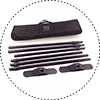
For recurring promotions, use a hardware system with replaceable printed flags. This keeps the base and pole in service while allowing you to rotate graphics for holidays, product launches, hiring drives, classes, seasonal services, and special events. It is a practical approach for businesses that update their window signage frequently.
Restaurants can switch from lunch specials to happy hour messaging. Fitness studios can promote trial classes in January and outdoor sessions in summer. Real estate teams can use flags for open houses, new listings, and leasing weekends. Event organizers can direct guests to registration, entrances, sponsor areas, and pickup locations.
If the promotion only lasts a day or two, speed matters. Print Banners NYC can help businesses prepare custom flags and other coordinated display materials when a local event, opening, or sale comes together on a tight deadline. Pairing a flag with a vinyl banner, retractable banner stand, or rigid sign makes the message easier to follow from the sidewalk to the point of purchase.
Keep Flags Looking Professional
Outdoor flags deal with rain, dirt, sun, and constant movement. Bring them inside during severe weather and at closing when possible. This protects the printed fabric, prevents avoidable damage, and keeps the hardware from becoming an overnight obstacle.
Inspect the pole sections, base, and connection points regularly. A loose base or bent pole makes even a strong graphic look neglected. Clean the fabric according to its material guidelines, let it dry completely before storage, and avoid folding a damp flag into its carrying bag.
Replace graphics when the message changes or colors have visibly faded. A storefront flag is one of the first things a customer sees. Fresh, readable graphics signal that the business behind the door is active, prepared, and ready for customers.
The best flag does not try to say everything. It gets noticed, delivers one useful message, and points people toward the next step - your entrance, your offer, or the reason to stop today.