











A trade show booth can look flat under convention-center lighting, while a bright retail window graphic can disappear after sunset. That is why the choice between lightbox versus SEG displays should start with where the display will be used, how long it needs to work, and how much visual impact the space requires. Both options use clean fabric graphics and aluminum framing, but they solve different visibility problems.
For a New York event, storefront, lobby, or pop-up, the wrong choice can mean spending money on illumination you do not need or selecting a non-lit frame that gets lost beside brighter competitors. Here is the practical difference.
What Is the Difference Between a Lightbox and an SEG Display?
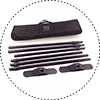
An SEG display uses a silicone edge graphic. The fabric print has a thin silicone strip sewn around its perimeter. That strip presses into a channel in the frame, stretching the graphic smooth with no visible hooks, poles, or wrinkles across the face. SEG frames can be freestanding, wall-mounted, hanging, or built into larger trade show systems.
A lightbox is a display frame with internal LED lighting. In many cases, its graphic is also an SEG fabric print. This is the point that often causes confusion: a lightbox can be an SEG display, but not every SEG display is a lightbox.
Think of SEG as the graphic attachment method and frame presentation. Think of a lightbox as an illuminated display format. A non-lit SEG frame relies on ambient room light. An SEG lightbox adds backlighting to make color, contrast, and messaging more visible.
That overlap matters when requesting a quote. Instead of only asking for an SEG display, specify whether you need a standard fabric SEG frame or a backlit SEG lightbox, along with the finished size and installation environment.
Lightbox Versus SEG Displays for Visibility
The biggest deciding factor is lighting. A backlit lightbox gives your message its own light source, so it remains readable in dim venues, evening activations, interior malls, hotel ballrooms, and busy exhibit halls. It can make brand colors appear more vivid and create a higher-end focal point from a distance.
A standard SEG display can still look sharp and professional. In a well-lit office reception area, conference room, retail wall, or daytime expo space, it delivers the smooth fabric look many businesses want without the cost or power requirement of illumination. It is also a strong choice when the display is part of a coordinated booth that already includes overhead venue lighting.
Lightboxes are not automatically better for every job. If your booth is small, your graphic contains fine text, or the event is only a few hours long, a non-lit SEG backdrop may provide the cleaner and more efficient solution. Backlighting increases impact, but it also makes design mistakes easier to see. Low-resolution images, weak contrast, and overly dense copy become more noticeable when the whole graphic is illuminated.
When a Lightbox Is the Better Call
Choose a lightbox when your display needs to compete visually. It is especially effective for product launches, premium retail campaigns, cosmetics and fashion displays, real estate presentations, media walls, sponsor activations, and trade show booths placed in crowded aisles.
A lightbox also makes sense when the display will be used repeatedly. If the hardware will support several campaigns over a year or more, you can replace the printed backlit fabric while keeping the frame and LED components. That turns the initial investment into a reusable marketing asset rather than a one-event graphic.
Before ordering, confirm access to power at the venue. Most LED lightboxes are energy-efficient, but they still need a nearby outlet and cable planning. At trade shows, electrical service may be an additional venue cost. For a storefront or permanent interior display, power access is usually easier to arrange.
When a Standard SEG Display Makes More Sense
Choose a standard SEG display when you need a polished fabric backdrop without lighting hardware. It is often the practical option for press backdrops, conference branding, office interiors, recruiting events, school programs, temporary retail signage, and portable exhibit walls.
Non-lit SEG displays generally cost less than comparable lightboxes and can be simpler to transport, set up, and store. They do not need power, which removes one more item from an event checklist. For teams working under a tight deadline, that simplicity can be more valuable than illumination.
They are also useful when you want graphics on both sides of a freestanding frame. Double-sided SEG displays can direct traffic, divide a space, or provide branding visible from multiple approaches. While double-sided lightboxes are available, the hardware, graphics, and budget are typically more involved.
Setup, Transport, and Event Logistics
For exhibitors, the display does not end at the printed graphic. It has to get through loading, registration, setup, and breakdown without creating a problem on event day.
SEG frames are available in a range of profiles, from compact portable frames to larger modular systems. Many are designed for straightforward assembly, with frame sections that connect and a fabric graphic that presses into place. The fabric itself folds for transport, which is a major advantage over rigid panels that need more storage space and can show surface damage.
Lightboxes involve a few additional steps. The frame must be assembled correctly, LED components must be connected, and the display needs a power source. This is manageable for most event teams, but it should be planned in advance. For an early-morning NYC setup or a same-day event order, confirm the hardware dimensions, case requirements, and whether the venue permits early access for installation.
Large displays may require more than one person to assemble safely and evenly. If the graphic is not seated fully into the frame channel, it can look loose at the corners. Start at the corners, work around the frame, and avoid pulling the fabric aggressively. A properly fitted SEG graphic should look taut, smooth, and intentional.
Graphic Design Changes for Backlit Displays
Do not send the same art file for a standard SEG display and assume it will print the same way on a lightbox. Backlit fabric changes how color and density appear because light passes through the material from behind.
For lightboxes, use high-resolution artwork and build in enough contrast for text to stay clear. Very dark backgrounds can look excellent, but large solid dark areas may show more variation if the design and lighting are not handled correctly. Soft gradients, skin tones, and product photography should be reviewed carefully. A proof is useful when color accuracy is central to the campaign.
Standard SEG fabric is more forgiving for certain designs because it reflects surrounding light rather than transmitting light. It works well for logos, large messaging, photographic backdrops, and branded patterns. In either format, keep key text away from the frame edge. The silicone border is hidden inside the channel, so important details should remain within the safe viewing area.
If the display will be photographed, consider the room lighting and camera angles. A lightbox can create an impressive background, but excessive brightness behind a speaker or product may affect photos. In those cases, placement and brightness settings matter as much as the print itself.
Budget: Look Beyond the First Event
A standard SEG display usually has the lower starting cost because it does not include LEDs, power components, or a deeper frame. It is a smart purchase when you need a clean professional backdrop for occasional events or interior branding.
A lightbox costs more upfront, but its visibility can justify the difference in a high-traffic location. If your booth is competing for attention across a show floor, a bright illuminated face may generate more stops than a standard backdrop. For retail, it can keep promotional messaging active during darker hours and make a window or wall display feel more permanent.
In both cases, the reusable hardware is where long-term value begins. Once you own the frame, new campaigns usually require a replacement fabric graphic rather than a completely new display. Plan your frame size around repeat use, not only the current promotion. A common size that fits multiple booths, lobby walls, or event footprints can be easier to reuse.
Choosing the Right Display for Your Project
The fastest way to decide is to match the display to the environment. Use a lightbox when visibility, premium presentation, or low-light performance is the priority. Use a standard SEG display when you want clean fabric graphics, portability, and a lower-cost setup without electrical planning.
For a last-minute event, do not choose based on looks alone. Measure the available space, verify venue rules, ask about power, and confirm whether you need single-sided or double-sided viewing. Also consider how the display will travel through elevators, loading docks, sidewalks, and exhibit hall doors.
Print Banners NYC can help match the frame, fabric, and turnaround to the job, whether you need a bright backlit feature wall or a straightforward SEG backdrop ready for the next event. The best display is the one that arrives prepared for the space, the schedule, and the audience you need to reach.